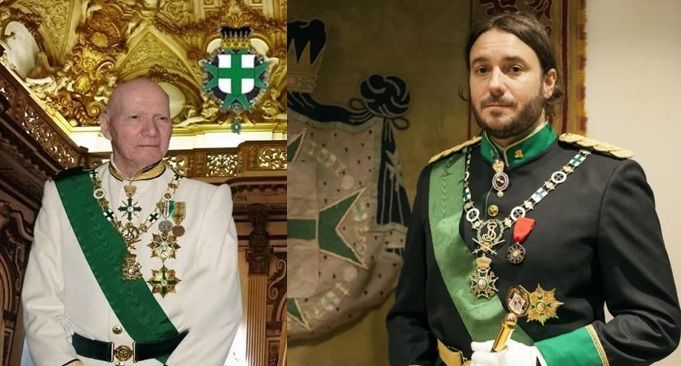
MEDITAZIONE PER IL NATALE DEL DIACONO ADRIANO FRINCHI, ACHLJ DEL PATRIARCATO ORTODOSSO DI MOSCA CAPPELLANO DEL GRAN BALIATO DI SICILIA
MEDITAZIONE PER IL NATALE DEL DIACONO ADRIANO FRINCHI, ACHLJ DEL PATRIARCATO ORTODOSSO DI MOSCA CAPPELLANO DEL GRAN BALIATO DI SICILIA
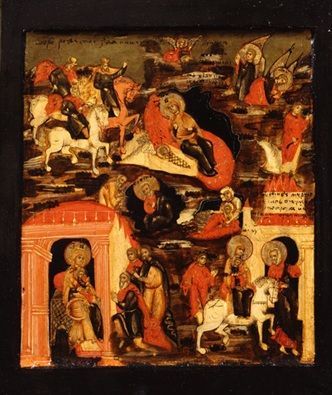
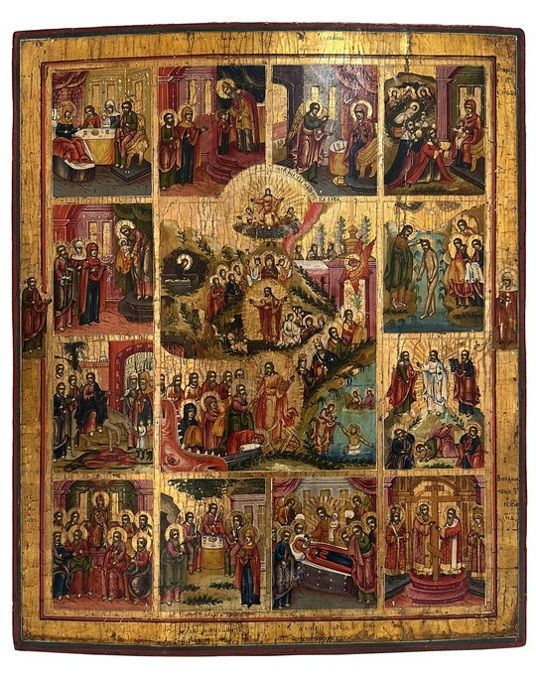
(Natività di Gesù, Icona della Russia centrale, 1725 – 1750, Museo delle icone russe, Palazzo Pitti, Firenze)
C’è un passo di sant’Atanasio il Grande, nel trattato Sull’Incarnazione del Verbo, che merita di essere ascoltato con calma. Scrive: «L’uomo non era più capace di guardare in alto… gli uomini si erano allontanati dalla contemplazione di Dio e, come precipitati in un abisso, tenevano gli occhi fissi verso il basso».
È un’immagine forte, eppure così vera: un’umanità con lo sguardo schiacciato sulle cose immediate, incapace di vedere oltre ciò che brilla per un momento e poi scompare.
Quando leggiamo queste parole, sembra che Atanasio stia parlando proprio del nostro tempo. In queste settimane di attesa, le nostre città si riempiono di luci, i negozi di desideri, i telefoni di offerte: eppure, nel profondo, non sempre nasce qualcosa. A volte, passato lo slancio iniziale, resta una strana stanchezza. Non perché il Natale non sia bello, ma perché rischiamo di fermarci solo alla superficie, come se la festa fosse tutta lì.
Atanasio descrive bene questo smarrimento: l’uomo, incapace di vedere Dio, lo cerca altrove. All’epoca erano le forze della natura, gli eroi, i miti. Oggi possono essere il benessere, la frenesia, il bisogno di riempire ogni vuoto. E il risultato è lo stesso: lo sguardo si abbassa, il cuore pure.
Ma è proprio qui che il testo del santo diventa una buona notizia. Dio non si è stancato di noi e non ha preteso che fossimo noi a risalire verso di Lui. È stato Lui a scendere. «Il Verbo di Dio prese un corpo e visse come uomo tra gli uomini», dice Atanasio. È un’immagine bellissima: Dio che non parla dall’alto, ma da vicino; Dio che non insegna dall’esterno, ma si siede accanto ai suoi figli, come un maestro che vede la fatica nei loro occhi e decide di spiegare tutto di nuovo, con pazienza.
Per questo nel Natale cristiano non celebriamo soltanto una nascita, ma un movimento: Dio che viene verso l’uomo. Dio che tocca ciò che possiamo vedere, udire, toccare. Dio che entra nella nostra carne, perché noi potessimo riconoscerlo in mezzo alle cose più semplici della vita.
Sant’Atanasio arriva a dire che qualunque fosse la direzione verso cui l’uomo guardava, Cristo là lo incontrava. Se l’uomo guardava la natura, la creazione intera indicava il suo Signore. Se cercava la forza negli uomini, le opere di Cristo rivelavano una forza diversa. Se era affascinato dal mondo oscuro dei demoni, li vedeva fuggire davanti a Lui. Se venerava gli eroi morti, la risurrezione mostrava la differenza tra un mito e il Dio vivo.
In altre parole: Dio non ci ha cercati in un luogo ideale, ma esattamente dove eravamo.
E questa è la verità più semplice e più consolante del Natale.
Dio non attende che la nostra vita diventi perfetta per farsi vicino.
Non chiede un cuore pulito per entrare: entra per pulire il cuore.
Non aspetta che lo cerchiamo: viene Lui a cercarci.
La Chiesa ortodossa, che celebra la Natività il 7 gennaio, lo ricorda con un tempo di preparazione che vuole soprattutto rimettere in ordine lo sguardo. Il digiuno, la preghiera, la sobrietà servono a fare spazio. Non a complicare la vita, ma a renderla più vera, più essenziale, più a misura di Dio e dell’uomo.
In un Occidente dove il Natale rischia di essere soffocato dall’eccesso, questo messaggio di Atanasio è prezioso: il Natale non è ciò che facciamo noi, ma ciò che fa Dio. È Lui che viene. È Lui che nasce. È Lui che illumina. E lo fa per un motivo semplice e sconvolgente: per restituirci la capacità di guardare in alto.
Forse è questo il dono più grande che possiamo chiedere in questi giorni: un cuore che ricomincia ad alzare lo sguardo. Un cuore che torna a vedere la luce. Un cuore che permette a Dio di nascere lì dove la nostra forza non arriva.
Perché, come ricorda Atanasio con disarmante chiarezza, Cristo è venuto «a cercare e salvare ciò che era perduto». E spesso, quel “perduto”, siamo proprio noi.
P. Adriano Frinchi
Chiesa Ortodossa Russa
CHRISTMAS MEDITATION BY DEACON ADRIANO FRINCHI, ACHLJ OF THE ORTHODOX PATRIARCHATE OF MOSCOW CHAPLAIN OF THE GRAND BAILIFF OF SICILY
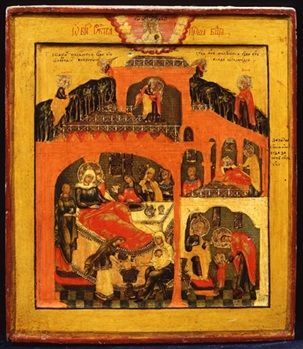
(Natività di Gesù, Icona della Russia centrale, 1730 – 1740, Museo delle icone russe, Palazzo Pitti, Firenze)
There is a passage by St. Athanasius the Great, in his treatise On the Incarnation of the Word, that deserves to be listened to calmly. He writes: “Man was no longer able to look up... men had turned away from the contemplation of God and, as if plunged into an abyss, kept their eyes fixed downward”.
It is a powerful image, yet so true: humanity with its gaze fixed on immediate things, unable to see beyond what shines for a moment and then disappears.
When we read these words, it seems that Athanasius is speaking precisely about our own time. In these weeks of waiting, our cities are filled with lights, shops with desires, telephones with offers: yet, deep down, something does not always arise. Sometimes, once the initial momentum has passed, a strange weariness remains. Not because Christmas is not beautiful, but because we risk stopping only at the surface, as if the celebration were all there.
Athanasius describes this confusion well: man, unable to see God, seeks Him elsewhere. At that time, it was the forces of nature, heroes, myths. Today, it may be well-being, frenzy, the need to fill every void. And the result is the same: our gaze is lowered, and so is our heart.
But it is precisely here that the saint's text becomes good news. God did not tire of us and did not demand that we climb up to Him. It was He who came down. ‘The Word of God took on a body and lived as a man among men,’ says Athanasius. It is a beautiful image: God who does not speak from above, but from close by; God who does not teach from outside, but sits next to his children, like a teacher who sees the fatigue in their eyes and decides to explain everything again, with patience.
This is why at Christmas we celebrate not only a birth, but a movement: God coming towards man. God touching what we can see, hear and touch. God entering our flesh, so that we might recognise him in the simplest things in life.
St Athanasius goes so far as to say that wherever man looked, Christ was there to meet him. If man looked at nature, the whole of creation pointed to his Lord. If he sought strength in men, the works of Christ revealed a different kind of strength. If he was fascinated by the dark world of demons, he saw them flee before Him. If he venerated dead heroes, the resurrection showed the difference between a myth and the living God.
In other words, God did not seek us in an ideal place, but exactly where we were.
And this is the simplest and most comforting truth of Christmas.
God does not wait for our lives to become perfect before drawing near to us.
He does not ask for a pure heart to enter: he enters to purify the heart.
He does not wait for us to seek him: he comes to seek us.
The Orthodox Church, which celebrates the Nativity on 7 January, commemorates him with a period of preparation that aims above all to restore order to our vision. Fasting, prayer and sobriety serve to make space. Not to complicate life, but to make it more real, more essential, more in tune with God and man.
In a West where Christmas risks being suffocated by excess, this message from Athanasius is precious: Christmas is not what we do, but what God does. It is He who comes. It is He who is born. It is He who enlightens. And He does so for a simple and overwhelming reason: to restore our ability to look up.
Perhaps this is the greatest gift we can ask for these days: a heart that begins to lift its gaze again. A heart that returns to seeing the light. A heart that allows God to be born where our strength cannot reach.
Because, as Athanasius reminds us with disarming clarity, Christ came “to seek and save what was lost”. And often, that “lost” is us.
Fr. Adriano Frinchi
Russian Orthodox Church
Iscriviti alla nostra Newsletter
News Ordine di San Lazzaro di Gerusalemme – Gran Baliato di Sicilia