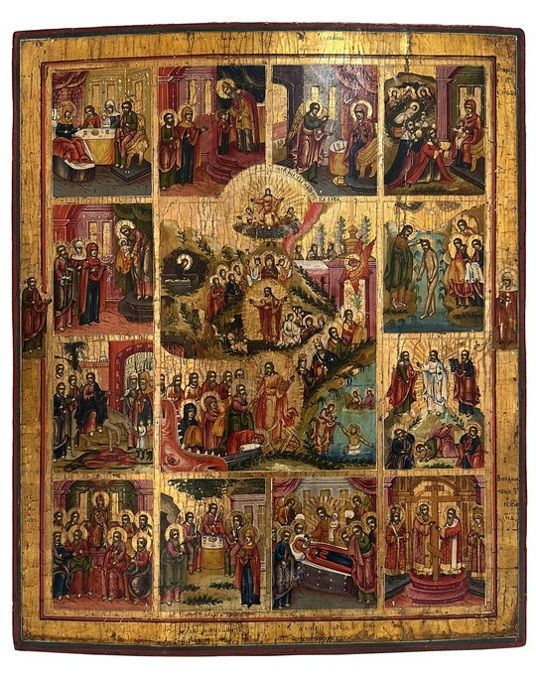
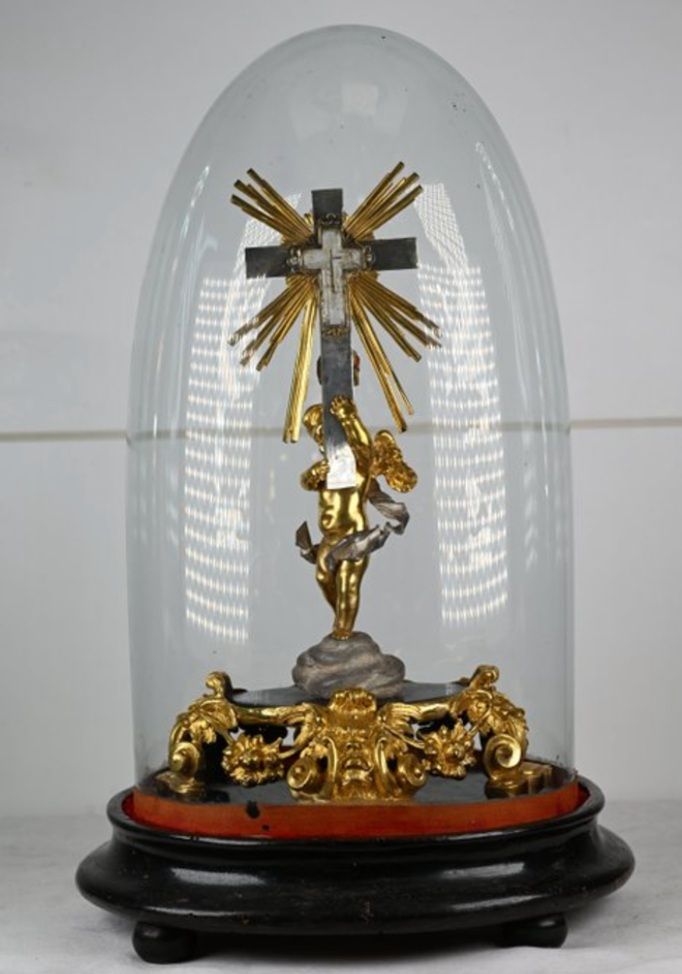
MEDITAZIONE PER IL SABATO SANTO DEL REV.DO ALAN GENTIL, ACHLJ, PASTORE DELLA CHIESA CRISTIANA AVVENTISTA CAPPELLANO DEL GRAN BALIATO DI SICILIA
MEDITAZIONE PER IL SABATO SANTO DEL REV.DO ALAN GENTIL, ACHLJ, PASTORE DELLA CHIESA CRISTIANA AVVENTISTA CAPPELLANO DEL GRAN BALIATO DI SICILIA
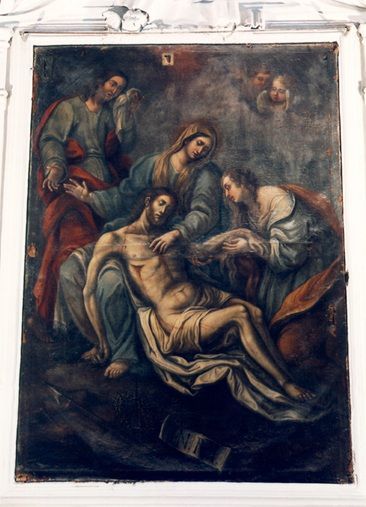
(Deposizione di Cristo nel sepolcro, olio su tela, 1850, Termini Imerese - PA)
Carissimi Confratelli e Consorelle dell’Ordine Militare ed Ospedaliero di San Lazzaro di Gerusalemme,
Nel cuore del mistero pasquale, incastonato tra il dramma cosmico del Venerdì della Passione e l'esplosione di vita della Domenica di Risurrezione, giace un giorno di profonda e perturbante quiete: il Sabato Santo. È un tempo di silenzio, un vuoto liturgico che la tradizione ha spesso attraversato con fretta, quasi con imbarazzo. Eppure, è proprio in questa assenza di parola e di azione che si cela una delle più radicali affermazioni della fede. Come recita un'antica omelia, "Oggi sulla terra c'è grande silenzio, grande silenzio e solitudine. Grande silenzio perché il Re dorme".
Questo sonno divino non è un'assenza, ma una presenza di tipo diverso. È il
mistero della descensus ad inferos, la discesa di Cristo nel regno della morte, un atto che svela la profondità insondabile della solidarietà di Dio con l'umanità. Per comprendere la portata di questo evento, possiamo guardare attraverso tre lenti convergenti che ne illuminano il significato per il nostro tempo.
La prima lente è quella offerta dal grande teologo tedesco Jürgen Moltmann, la cui fede fu forgiata nel crogiolo dei campi di prigionia. Per Moltmann, la croce non è un semplice evento storico, ma un dramma che si consuma all'interno della stessa vita di Dio. Il grido di abbandono del Figlio sulla croce è reale: è l'esperienza di una separazione abissale che Dio stesso assume su di sé. Il Sabato Santo ne è la conseguenza necessaria. La discesa agli inferi non è un'azione trionfalistica, ma l'atto di passività più estremo: Cristo, autenticamente morto, condivide la sorte di tutti i morti. Scende nello Sheol, il luogo dell'assenza e della disperazione, non per conquistarlo con la forza, ma per esservi presente con la sua morte. In questo gesto si compie una riconciliazione universale, poiché non esiste abisso esistenziale, inferno personale o storico, che non sia stato visitato e santificato da questa silenziosa presenza divina.C
Se Moltmann ci offre una chiave metafisica, il teologo e martire salvadoregno Ignacio Ellacuría ci fornisce una lettura storico-politica di una potenza devastante. Ellacuría vedeva nella sofferenza dei popoli oppressi dell'America Latina la continuazione storica della passione di Cristo, coniando l'espressione "popolo crocifisso". In questa prospettiva, lo Sheol non è più solo una dimensione mitologica, ma assume i contorni concreti dello "Sheol storico" degli imperi coloniali: le miniere disumane, le piantagioni bagnate di sudore e sangue, i centri di tortura delle dittature. La discesa di Cristo diventa allora la sua identificazione radicale e irrevocabile con le vittime della storia. Il silenzio del Sabato Santo è il silenzio imposto per secoli ai popoli a cui è stata sottratta la parola, la cultura, la dignità, l’epistemicidio di cui parla il sociologo portoghese Boaventura de Sousa Santos. Di conseguenza, la speranza pasquale non può essere una consolazione puramente spirituale; deve avere un'efficacia storica, manifestandosi come possibilità reale di liberazione e di giustizia per coloro che sono stati messi a tacere.
Infine, la premessa presente nel sabato santo ha il potere di attraversare le religioni e filosofie. Attraverso un approccio interreligioso, l'evento del Sabato Santo si collega al concetto di śūnyatā, la "vacuità" centrale nel Buddhismo Mahāyāna.
L'inno cristologico della lettera ai Filippesi descrive la passione come un atto di kenosis, di auto-svuotamento: Cristo si spoglia della sua forma divina per assumere quella di servo, e il Sabato Santo rappresenta il culmine di questo svuotamento. I maestri della Scuola di Kyoto, come Masao Abe, hanno visto qui una straordinaria convergenza. La vacuità buddhista non è un nulla nichilista, ma un "vuoto pieno", la realtà ultima spogliata di ogni nostra pretesa concettuale. Il Dio che si svuota per amore e la realtà che è intrinsecamente vuota di un sé permanente puntano a una verità che si trova solo nel superamento dell'ego. Il silenzio del Sabato diventa così uno spazio contemplativo universale, un luogo dove il cristiano, svuotato delle proprie certezze, può incontrare l'altro in una comune vulnerabilità e in un comune anelito alla trascendenza.
In un mondo saturo di rumore, di polarizzazione e di violenza, riscoprire la teologia del Sabato Santo è un atto di resistenza spirituale e dialogo continuo. Esso ci invita a scendere nei nostri inferni, personali e collettivi, non con la pretesa di dominarli, ma con l'umiltà di esservi presenti, in silenzio, a fianco di chi soffre. Ci insegna che la vera riconciliazione non nasce dall'imposizione di una parola, ma dall'ascolto del silenzio dell'altro.
La speranza che emerge da questo abisso non è un ottimismo a buon mercato, ma la fiducia tenace che, anche nella notte più buia, Dio è presente, silenziosamente all'opera per tessere legami di comunione dove regnava la separazione. Il Sabato Santo è il cuore pulsante e silenzioso della Pasqua: il momento in cui, nel punto più basso della storia, si manifesta la potenza inerme e universale dell'amore che tutto riconcilia.
Rev. Alan Gentil, AChLJ
MEDITATION FOR HOLY SATURDAY BY THE REVEREND ALAN GENTIL, ACHLJ, PASTOR OF THE ADVENTIST CHURCH CHAPLAN OF THE GRAND BAILIWICK OF SICILY
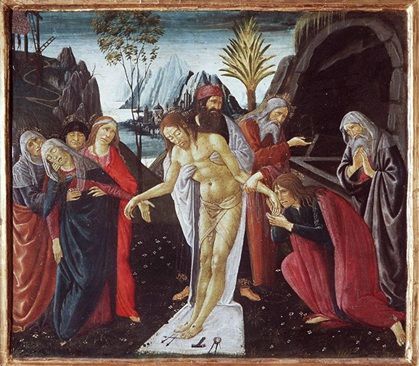
(The Entombment of Christ, Jacopo del Sallajo, 1442–1493, Galleria dell'Accademia, Florence)
Dear Confreres and Sisters of the Military and Hospitaller Order of St Lazarus of Jerusalem,
At the heart of the Paschal Mystery, nestled between the cosmic drama of Good Friday and the explosion of life on Easter Sunday, lies a day of profound and unsettling stillness: Holy Saturday. It is a time of silence, a liturgical void that tradition has often passed through in haste, almost with embarrassment. Yet it is precisely in this absence of word and action that one of the most radical affirmations of faith is concealed. As an ancient homily states, ‘Today there is great silence on earth, great silence and solitude. Great silence because the King sleeps’.
This divine sleep is not an absence, but a presence of a different kind. It is the mystery of the descensus ad inferos, Christ’s descent into the realm of death, an act that reveals the unfathomable depth of God’s solidarity with humanity. To grasp the significance of this event, we can look through three converging lenses that shed light on its meaning for our own time.
The first perspective is that offered by the great German theologian Jürgen Moltmann, whose faith was forged in the crucible of the prison camps. For Moltmann, the cross is not merely a historical event, but a drama that unfolds within the very life of God. The Son’s cry of abandonment on the cross is real: it is the experience of an abysmal separation that God himself takes upon himself. Holy Saturday is the necessary consequence of this. The descent into hell is not a triumphal act, but the most extreme act of passivity: Christ, truly dead, shares the fate of all the dead. He descends into Sheol, the place of absence and despair, not to conquer it by force, but to be present there through his death. In this gesture, a universal reconciliation is accomplished, for there is no existential abyss, no personal or historical hell, that has not been visited and sanctified by this silent divine presence.
Whilst Moltmann offers us a metaphysical interpretation, the Salvadoran theologian and martyr Ignacio Ellacuría provides a historical-political reading of devastating power. Ellacuría saw in the suffering of the oppressed peoples of Latin America the historical continuation of Christ’s passion, coining the expression ‘crucified people’. From this perspective, Sheol is no longer merely a mythological dimension, but takes on the concrete contours of the ‘historical Sheol’ of the colonial empires: the inhumane mines, the plantations drenched in sweat and blood, the torture centres of the dictatorships. Christ’s descent thus becomes his radical and irrevocable identification with the victims of history. The silence of Holy Saturday is the silence imposed for centuries on peoples from whom speech, culture and dignity have been taken away—the ‘epistemicide’ of which the Portuguese sociologist Boaventura de Sousa Santos speaks. Consequently, Easter hope cannot be a purely spiritual consolation; it must have historical efficacy, manifesting itself as a real possibility of liberation and justice for those who have been silenced.
Finally, the premise present in Holy Saturday has the power to transcend religions and philosophies. Through an interreligious approach, the event of Holy Saturday connects with the concept of śūnyatā, the ‘emptiness’ central to Mahāyāna Buddhism.
The Christological hymn in the Epistle to the Philippians describes the Passion as an act of kenosis, of self-emptying: Christ strips himself of his divine form to take on that of a servant, and Holy Saturday represents the culmination of this self-emptying. The masters of the Kyoto School, such as Masao Abe, saw an extraordinary convergence here. Buddhist emptiness is not a nihilistic nothingness, but a ‘full void’, the ultimate reality stripped of all our conceptual pretensions. The God who empties himself out of love and the reality that is intrinsically empty of a permanent self point to a truth found only in the transcendence of the ego. The silence of Holy Saturday thus becomes a universal contemplative space, a place where the Christian, stripped of their own certainties, can encounter the other in a shared vulnerability and a shared yearning for transcendence.
In a world saturated with noise, polarisation and violence, rediscovering the theology of Holy Saturday is an act of spiritual resistance and ongoing dialogue. It invites us to descend into our personal and collective hells, not with the pretence of dominating them, but with the humility to be present there, in silence, alongside those who suffer. It teaches us that true reconciliation does not arise from the imposition of a word, but from listening to the silence of the other.
The hope that emerges from this abyss is not cheap optimism, but a steadfast trust that, even in the darkest night, God is present, silently at work to weave bonds of communion where separation once reigned. Holy Saturday is the silent, beating heart of Easter: the moment when, at the lowest point in history, the defenceless and universal power of love that reconciles all things is revealed.
Rev. Alan Gentil, AChLJ
Iscriviti alla nostra Newsletter
News Ordine di San Lazzaro di Gerusalemme – Gran Baliato di Sicilia