PROSSIMA INCORONAZIONE DEL SIMULACRO DI NOSTRA SIGNORA DEL MONTE CARMELO
PROSSIMA INCORONAZIONE DEL SIMULACRO DI NOSTRA SIGNORA DEL MONTE CARMELO
La sacra Scrittura esalta la bellezza del monte Carmelo, là dove il profeta Elia difendeva la purezza della fede d’Israele nel Dio vivente.
Nel 1498 Papa Alessandro VI ebbe ad emanare una bolla di soppressione per i Cavalieri di San Lazzaro, disponendone la riunione con quelli di San Giovanni, questa rimase lettera morta, soprattutto in Francia, dove l'Ordine possedeva ingenti proprietà e benefici feudali. Il re Enrico IV di Francia, convertitosi dal protestantesimo al cattolicesimo, decise di appoggiare i cavalieri francesi di San Lazzaro che rifiutavano la bolla di scioglimento e istituì nel 1604 un meno conosciuto Ordine Militare di Nostra Signora del Monte Carmelo, a carattere religioso e monastico, tant'è che i membri professavano i voti canonici, al quale, pochi mesi dopo, riunì amministrativamente (ma non unificò) l'Ordine di San Lazzaro, con la formale approvazione della Santa Sede. In Francia la nuova istituzione fu conosciuta con il nome completo di Ordini Riuniti di Nostra Signora del Monte Carmelo e di San Lazzaro di Gerusalemme e le insegne usate furono una fusione della nuova croce del Carmelo con quella di San Lazzaro. L'unione fu poi confermata da Luigi XIV di Francia nel 1672, nel 1694, e nel 1698, da Luigi XV nel 1767, 1770 e 1772 e, durante la Restaurazione da Luigi XVIII.
Fin dalle origini questi Ordini Riuniti si dimostrarono attivi in svariate spedizioni navali: sulle navi sventolavano il vessillo del Re e quello con la croce verde di San Lazzaro. Dal 1612 al 1667 i suoi vascelli parteciparono a diverse battaglie: al fiume Niger, nel golfo di Guinea, e soprattutto contro i corsari inglesi, tantoché Luigi XIV affidò la carica di “Guardacoste di Bretagna” all'ammiraglio di Coudray, cavaliere lazzarita.
Nel dicembre 1667 l'Ordine fondò a Parigi un'Accademia di Marina e due anni dopo Luigi XIV con lettera patente del 28 dicembre istituì cinque nuovi Gran Priorati: Gran Priorato di Normandia, Gran Priorato di Bretagna, Gran Priorato di Bourgogne, Gran Priorato di Fiandra, Gran Priorato di Langue doc.
Nel 1773 divenne Gran Maestro il conte di Provenza Luigi Stanislao di Borbone-Francia, futuro Luigi XVIII di Francia, che con decreto del 21 gennaio 1779 separò nuovamente i due Ordini: l'Ordine di Nostra Signora del Monte Carmelo venne riservato agli allievi dell'Accademia Militare, mentre solo i tre migliori di ogni anno sarebbero stati insigniti del più prestigioso Ordine di San Lazzaro.
L'École Militaire fu chiusa per decreto reale nell'ottobre del 1787 e non furono più consentite ammissioni all'Ordine di Nostra Signora del Monte Carmelo dopo il 1788. Si decise di consentire l'estinzione dell'Ordine di Nostra Signora del Monte Carmelo, che, in base al diritto canonico, sarebbe avvenuta cento anni dopo la morte dell'ultimo membro ammesso in quell'Ordine. L'Ordine di San Lazzaro di Gerusalemme, il più antico, fu autorizzato, invece, nel settembre del 1788 da Re Luigi XVI ad acquistare l'edificio che ospitava l'École Militaire.
Nel 1788, scoppiata la Rivoluzione, il governo abolì tutti gli ordini cavallereschi in Francia: espropriato dei suoi beni l'Ordine di San Lazzaro continuò la sua attività in esilio nominando nuovi cavalieri, guidato dal Gran Maestro, il Conte di Provenza, fratello minore di Luigi XVI e futuro re di Francia come Luigi XVIII dal 1814 al 1824.
Con la restaurazione della monarchia, l'Ordine di San Lazzaro riprese vita totalmente, continuando ad essere conferito a sovrani stranieri, fra cui lo zar Alessandro I di Russia.
Nel 1830 Luigi Filippo I di Francia, appartenente ai Borbone-Orléans, ramo cadetto dei Borbone di Francia, prima Luogotenente Generale del Regno a seguito dell’abdicazione di Carlo X e, poi, Re dei Francesi dal 9 agosto 1830, scalzando il legittimo erede Enrico, duca di Bordeaux, pochi giorni dopo la sua ascesa al trono, con decreto del 14 agosto 1830, statuì che solo l'Ordine della Legion d'Onore veniva mantenuto sotto la protezione Sovrana e l’Ordine di San Lazzaro, come tutti gli altri Ordini del vecchio regime, privato della protezione della Corona di Francia, fu affidato al governo di un Consiglio di Reggenza che ammise nuovi cavalieri e, nel 1841, mise l’Ordine sotto la protezione spirituale del Patriarca Greco-Cattolico Melchita di Antiochia, ristabilendo l’originario legame con la Chiesa d’Oriente, Patriarca che assunse temporaneamente pure la carica di Amministratore Generale fino al 1929, hanno in cui fu nominato un Luogotenente Generale, in attesa del ripristino della carica di Gran Maestro, il quale, poi, nel 1935 fu eletto egli stesso 44° Gran Maestro dell’Ordine.
L’Ordine di Nostra Signora del Monte Carmelo fu, invece, lasciato estinguere.
Nel 1920, intanto, presso gli Uffici del Registro di Parigi erano stati depositati i nuovi statuti dell'Ordine di San Lazzaro che, da allora, agisce come persona giuridica di diritto privato.
I lazzariti, però, non hanno dimenticato il legame che li ha uniti così intensamente, per quasi due secoli, alla Beata Vergine e, nel 2002, a Madrid, istituirono l’Accademia Internazionale di Nostra Signora del Monte Carmelo, con sede permanente presso il Castello di Lanzun a Malta, rinominata nel 2014 Accademia Internazionale dell’Ordine di San Lazzaro. Molti pellegrinaggi internazionali dell’Ordine, inoltre, si svolgono presso Santuari mariani.
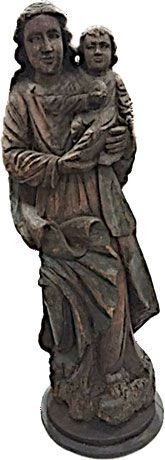
Non poteva, infine, mancare, per i cavalieri siciliani, nella loro chiesa di Monreale, un altare laterale dedicato alla Beata Vergine Maria, dove troneggia una splendida effige del ‘400 della Vergine con bambino, che il 12 luglio, alle ore 11.30, sarà incoronata, presso l’Abbazia di San Martino della Scale con il titolo di Nostra Signora del Monte Carmelo, durante un solenne pontificale celebrato dall’Abate di San Martino Dom Vittorio Rizzone, ECLJ, Cappellano del Gran Baliato di Sicilia, per poi essere riportata presso la Chiesa Capitolare dell’Ordine in Monreale.
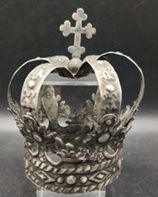
Il bambinello sarà incoronato con una corona in argento del 1700.
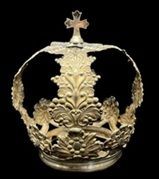
Sul capo della Vergine, invece, sarà posta una corona in argento del 1850.
NEXT CORONATION OF THE IMAGE OF OUR LADY OF MOUNT CARMEL
Holy Scripture extols the beauty of Mount Carmel, where the prophet Elijah defended the purity of Israel's faith in the living God.
In 1498, Pope Alexander VI issued a papal bull suppressing the Knights of Saint Lazarus, ordering their reunion with the Knights of Saint John. This remained a dead letter, especially in France, where the Order held substantial property and feudal benefits. King Henry IV of France, having converted from Protestantism to Catholicism, decided to support the French Knights of Saint Lazarus who refused the papal bull of dissolution. In 1604, he established a lesser-known Military Order of Our Lady of Mount Carmel, a religious and monastic order whose members professed canonical vows. A few months later, he administratively merged (but did not unify) the Order of Saint Lazarus with it, with the formal approval of the Holy See. In France, the new institution was known by its full name: the United Orders of Our Lady of Mount Carmel and of Saint Lazarus of Jerusalem, and the insignia used were a fusion of the new Carmelite cross with that of Saint Lazarus. The union was later confirmed by Louis XIV of France in 1672, 1694, and 1698, by Louis XV in 1767, 1770, and 1772, and, during the Restoration, by Louis XVIII.
From their very beginnings, these United Orders were active in various naval expeditions: their ships flew the King's standard and that with the green cross of Saint Lazarus. From 1612 to 1667, their vessels participated in several battles: on the Niger River, in the Gulf of Guinea, and especially against English corsairs, so much so that Louis XIV entrusted the post of "Coast Guard of Brittany" to Admiral de Coudray, a Lazarite knight.
In December 1667, the Order founded a Naval Academy in Paris, and two years later, Louis XIV, with a patent dated December 28, established five new Grand Priories: the Grand Priory of Normandy, the Grand Priory of Brittany, the Grand Priory of Burgundy, the Grand Priory of Flanders, and the Grand Priory of Languedoc.
In 1773, Count Louis Stanislaus of Bourbon-France, the future Louis XVIII of France, became Grand Master. With a decree dated January 21, 1779, he again separated the two Orders: the Order of Our Lady of Mount Carmel was reserved for students of the Military Academy, while only the top three each year would be awarded the more prestigious Order of Saint Lazarus.
The École Militaire was closed by royal decree in October 1787, and no further admissions to the Order of Our Lady of Mount Carmel were permitted after 1788. It was decided to allow the Order of Our Lady of Mount Carmel to become extinct, which, according to canon law, would occur one hundred years after the death of the last member admitted to that Order. The Order of Saint Lazarus of Jerusalem, the oldest, was authorized by King Louis XVI in September 1788 to purchase the building that housed the École Militaire.
In 1788, with the outbreak of the Revolution, the government abolished all orders of chivalry in France. Disposing of its assets, the Order of Saint Lazarus continued its activities in exile, appointing new knights, led by the Grand Master, the Count of Provence, younger brother of Louis XVI and future king of France as Louis XVIII from 1814 to 1824.
With the restoration of the monarchy, the Order of Saint Lazarus, which in 1779 had been again separated from the Order of Our Lady of Mount Carmel, was fully revived, continuing to be awarded to foreign sovereigns, including Tsar Alexander I of Russia.
In 1830, Louis Philippe I of France, belonging to the Bourbon-Orléans family, a cadet branch of the Bourbons of France, first Lieutenant General of the Kingdom following the abdication of Charles X and, then, King of the French from 9 August 1830, ousting the legitimate heir Henry, Duke of Bordeaux, a few days after his accession to the throne, with a decree of 14 August 1830, established that only the Order of the Legion of Honour was maintained under the Sovereign protection and the Order of Saint Lazarus, like all the other Orders of the old regime, deprived of the protection of the Crown of France, was entrusted to the government of a Council of Regency which admitted new knights and, in 1841, placed the Order under the spiritual protection of the Melkite Greek-Catholic Patriarch of Antioch, re-establishing the original link with the Church of the East, Patriarch who also temporarily assumed the office of General Administrator until In 1929, a Lieutenant General was appointed, pending the reinstatement of the office of Grand Master. He was then elected the 44th Grand Master of the Order in 1935.
The Order of Our Lady of Mount Carmel, however, was allowed to become extinct.
Meanwhile, in 1920, the new statutes of the Order of Saint Lazarus were deposited at the Registry Offices in Paris, and since then it has operated as a legal entity under private law.
The Lazarites, however, have not forgotten the bond that has united them so intensely, for almost two centuries, to the Blessed Virgin. In 2002, they established the International Academy of Our Lady of Mount Carmel in Madrid, with its permanent headquarters at Lanzun Castle in Malta. It was renamed the International Academy of the Order of Saint Lazarus in 2014. Many of the Order's international pilgrimages also take place at Marian shrines.
Finally, the Sicilian Knights could not fail to have a side altar dedicated to the Blessed Virgin Mary in their church in Monreale. This altar features a splendid 15th-century effigy of the Virgin and Child. On July 12th, at 11:30 a.m., the effigy will be crowned at the Abbey of San Martino della Scale with the title of Our Lady of Mount Carmel, during a solemn pontifical mass celebrated by the Abbot of San Martino, Dom Vittorio Rizzone, ECLJ, Chaplain of the Grand Bailiwick of Sicily. The effigy will then be returned to the Order's Chapter Church in Monreale.
The Child will be crowned with a silver crown from 1700.
A silver crown from 1850 will be placed on the Virgin's head.
Iscriviti alla nostra Newsletter
News Ordine di San Lazzaro di Gerusalemme – Gran Baliato di Sicilia