MEDITAZIONE PER IL MARTEDÌ SANTO DEL REV.DO ADRIANO FRINCHI, ACHLJ, DIACONO DEL PATRIARCATO ORTODOSSO DI MOSCA CAPPELLANO DEL GRAN BALIATO DI SICILIA
MEDITAZIONE PER IL MARTEDÌ SANTO DEL REV.DO ADRIANO FRINCHI, ACHLJ, DIACONO DEL PATRIARCATO ORTODOSSO DI MOSCA CAPPELLANO DEL GRAN BALIATO DI SICILIA
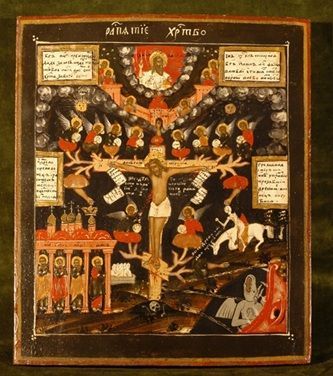
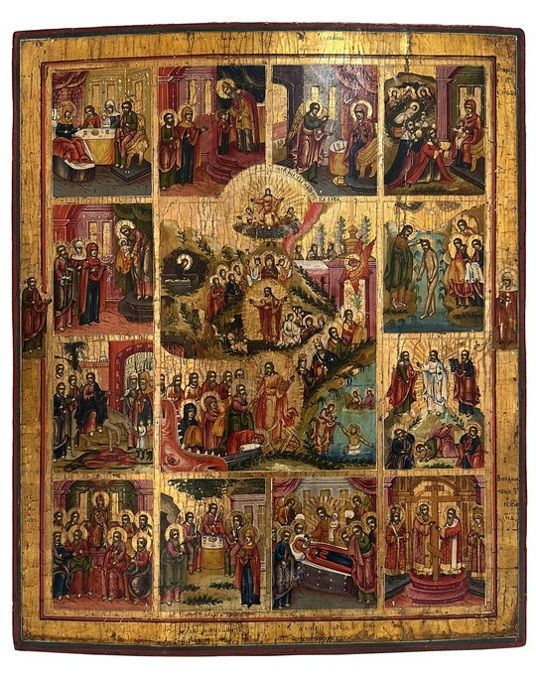
(Frutti della Passione di Cristo, Russia, Tempera su tavola, 1725, Museo delle Icone Russe, Palazzo Pitti, Firenze)
Carissimi Confratelli e Consorelle dell’Ordine Militare ed Ospedaliero di San Lazzaro di Gerusalemme,
Nel Martedì Santo, Oriente e Occidente non solo ricordano gli stessi eventi: li contemplano con due sensibilità diverse, entrambe profondissime, entrambe necessarie.
In Occidente, la liturgia resta essenziale, quasi spoglia. Il centro è la proclamazione del Vangelo secondo Giovanni (Gv 13): Gesù, turbato nello spirito, annuncia il tradimento. Tutto si gioca in una scena concreta, storica, precisa.
Il tono è sobrio, lineare: non ci sono grandi sviluppi simbolici, ma una progressione narrativa che conduce lentamente verso il Triduo. L’accento è cristologico ed etico insieme: Cristo conosce il cuore dell’uomo, e l’uomo è posto davanti alla propria responsabilità.
La forza della liturgia latina sta proprio qui: farci entrare nel fatto.
Il tradimento non è un’idea, ma un gesto reale, compiuto da uno dei Dodici.
E proprio per questo diventa domanda personale: dove mi colloco io in questa scena?
In Oriente, la stessa giornata si dilata interiormente. Il Martedì Santo è celebrato soprattutto attraverso gli uffici dell’Orthros e delle Ore, dove il linguaggio non è narrativo, ma simbolico e poetico.
Il tema dominante è quello dello Sposo che viene nella notte:
“Ecco lo Sposo viene a mezzanotte, e beato il servo che troverà vigilante”.
Qui non si segue tanto la cronologia degli eventi, quanto il loro significato spirituale. Le parabole evangeliche (le dieci vergini, i talenti) e la figura della donna peccatrice si intrecciano in un’unica grande icona interiore. Accanto a questa, emerge in controluce Giuda Iscariota: non tanto come personaggio storico, ma come possibilità dell’anima.
La liturgia bizantina lavora per immagini, contrasti, ripetizioni. Fa cantare il cuore, più che spiegare alla mente. Insiste sulla vigilanza (νήψις), sulla luce della lampada, sull’urgenza della conversione.
Se l’Occidente segue una linea — il racconto che avanza verso la croce —
l’Oriente apre uno spazio — l’anima che si rivela davanti allo Sposo.
Eppure, è lo stesso mistero.
L’Occidente ci insegna la concretezza: il tradimento accade davvero, nella storia, dentro una relazione reale con Cristo.
L’Oriente ci insegna la profondità: quel tradimento nasce prima, nel segreto del cuore che si raffredda.
L’Occidente illumina il volto di Cristo che parla.
L’Oriente illumina il cuore dell’uomo che ascolta.
Così il Martedì Santo diventa una soglia: tra il fatto e il significato, tra la storia e l’interiorità.
E, alla fine, le due voci si uniscono in una sola domanda — la più semplice e la più esigente: quando lo Sposo verrà, ci troverà svegli?
Diacono Adriano Frinchi, AChLJ
MEDITATION FOR HOLY TUESDAY BY THE REVEREND ADRIANO FRINCHI, ACHLJ, DEACON OF THE ORTHODOX PATRIARCHATE OF MOSCOW CHAPLAN OF THE GRAND BAILIWICK OF SICILY
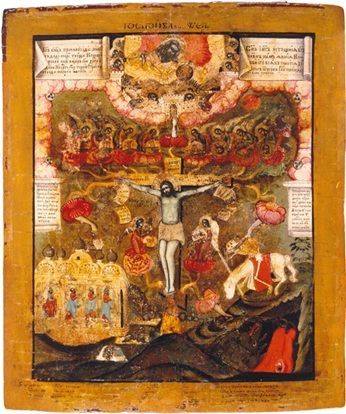
(The Passion of Christ, Russia, tempera on panel, c. 1700, Gallerie d'Italia, Vicenza)
Dear Confreres and Sisters of the Military and Hospitaller Order of St Lazarus of Jerusalem,
On Holy Tuesday, East and West do not merely recall the same events: they contemplate them with two different sensibilities, both profoundly deep, both essential.
In the West, the liturgy remains essential, almost stripped down. The focus is on the proclamation of the Gospel according to John (Jn 13): Jesus, troubled in spirit, foretells the betrayal. Everything unfolds within a concrete, historical, precise scene.
The tone is sober, straightforward: there are no grand symbolic developments, but a narrative progression that leads slowly towards the Triduum. The emphasis is both Christological and ethical: Christ knows the heart of man, and man is confronted with his own responsibility.
The strength of the Latin liturgy lies precisely here: in drawing us into the event.
Betrayal is not an idea, but a real act, committed by one of the Twelve.
And precisely for this reason it becomes a personal question: where do I stand in this scene?
In the East, the same day unfolds inwardly. Holy Tuesday is celebrated above all through the services of Orthros and the Hours, where the language is not narrative, but symbolic and poetic.
The dominant theme is that of the Bridegroom coming in the night:
“Behold, the Bridegroom comes at midnight, and blessed is the servant whom he finds watching.” Here, the focus is not so much on the chronology of events as on their spiritual significance. The Gospel parables (the ten virgins, the talents) and the figure of the sinful woman intertwine to form a single, great inner icon. Against this backdrop, Judas Iscariot emerges: not so much as a historical figure, but as a possibility of the soul.
The Byzantine liturgy works through images, contrasts and repetitions. It makes the heart sing, rather than explaining to the mind. It emphasises vigilance (νήψις), the light of the lamp, and the urgency of conversion.
If the West follows a narrative arc—the story moving towards the cross—
the East opens up a space—the soul revealing itself before the Bridegroom.
And yet, it is the same mystery.
The West teaches us concreteness: the betrayal truly happens, in history, within a real relationship with Christ.
The East teaches us depth: that betrayal arises first, in the secret of the heart that grows cold.
The West illuminates the face of Christ who speaks.
The East illuminates the heart of the man who listens.
Thus Holy Tuesday becomes a threshold: between the event and its meaning, between history and interiority.
And, in the end, the two voices unite in a single question — the simplest and the most demanding: when the Bridegroom comes, will he find us awake?
Deacon Adriano Frinchi, AChLJ
Iscriviti alla nostra Newsletter
News Ordine di San Lazzaro di Gerusalemme – Gran Baliato di Sicilia